
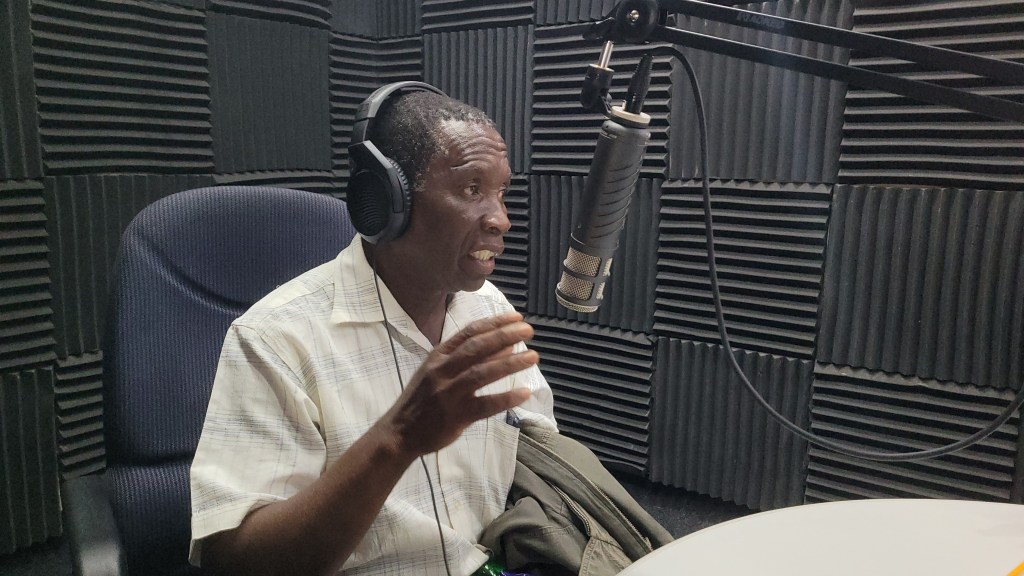

By Yvonne T. Buzwane | Bulilima | 8 November 2025
Child pregnancies are emerging as a serious concern in Bulilima District, where the National AIDS Council (NAC) says girls aged 10 to 14 years are now appearing among antenatal care (ANC) bookings and new sexually transmitted infection (STI) cases.
According to data shared during a recent NAC media tour, girls in this age group made up 2.3 percent of all ANC bookings recorded from January to August 2025, while 1.8 percent of new STI infections were also recorded among them.
With an HIV prevalence rate of 17.6 percent and an incidence rate of 0.26 percent, the highest in Matabeleland South, Bulilima faces growing concern that the district’s youngest girls are being exposed to sexual activity far too early, often under exploitative circumstances.
Mr Ronald Hanyane, the Bulilima District AIDS Coordinator (DAC) from NAC, expressed concern over the findings.
“Children at that age should be in school, not booking for antenatal care or seeking treatment for infections,” he said. “Someone is disrupting their lives, and as a community, we should all be concerned.”
Hanyane said the situation demands a stronger community response to protect children, particularly in rural areas where parents often migrate for work, leaving minors under the care of elderly relatives.
“We are seeing evidence that young girls are being taken advantage of,” he said. “This is not just a health issue, it is a protection issue, and it calls for action from everyone, including parents, teachers, traditional leaders, and law enforcement.”
A community member said those responsible must be held accountable.
“When a 13-year-old gets treated for an STI, it means a crime has been committed,” he said. “We can’t pretend these girls are impregnating themselves or infecting themselves. The men involved must face the law.”
The National AIDS Council has been implementing several community interventions to address HIV prevention and sexual health education. However, officials say that while programs such as Sista2Sista are helping to empower and educate girls, there is still a need to reach boys and men with targeted behavioral programs.
In Umzingwane District, NAC has introduced a Behavioral Change Community Motivator (BCCM) model to close this gap. The model trains Male Mobilizers to lead discussions on HIV prevention, treatment, consent, and responsible sexual behavior.
Speaking during the media tour, the Umzingwane District AIDS Coordinator, Mr Mduduzi Ngwenya, explained that the program has helped men better understand health issues, the law, and the importance of consent.
“The BCCM helps men take responsibility,” he said. “Male Mobilizers lead a three-month group cohort and provide follow-up support for individuals who are too busy for group sessions. The mobilizers can refer or even accompany their mentees to health facilities for services such as testing or treatment. This approach is also addressing men’s low health-seeking behavior.”
The success of this model has sparked calls for its replication in other districts like Bulilima, where harmful cultural norms and lack of education among men continue to place young girls at risk.
Sista2Sista mentor Sanelisiwe Nyathi from Masendu said empowering girls is important, but protecting them from predators is even more urgent.
“We talk to girls about confidence, health, and making informed choices, but it’s heartbreaking to see children younger than 15 already pregnant,” she said. “These girls are still babies themselves. We need to teach boys and men that minors are not girlfriends, they are children who must be protected.”
Nyathi said community mentorship and male-focused programs could work hand-in-hand to stop the abuse of minors and reduce new infections.
“If men understand the laws and value of protecting girls, our work becomes easier,” she said. “Empowerment for girls must go together with accountability for men.”
NAC says it will continue working with community leaders in Bulilima to strengthen family dialogue, increase awareness, and expand prevention programs to include men and boys.
But the statistics serve as a warning: child pregnancies are not just a moral issue, they are evidence of a protection gap that demands urgent attention.
“Every girl under 15 who becomes pregnant is a reminder that we have failed to protect her,” said a community member. “We must act now to stop this cycle before another child loses her future.”
As Zimbabwe prepares to commemorate World AIDS Day, which will be hosted in Matabeleland South Province this year, Bulilima’s story stands as a reminder that the fight against HIV is not only about medicine but about protecting the next generation. The call is clear: every community member, parent, and leader must be part of the solution, not the problem.


 radiobukalanga.org
Leave a comment