
By Yvonne T. Buzwane | Masendu, Bulilima | 5 November 2025
Every week in Masendu Ward, the laughter of young women fills the air as they gather under a tree, their faces hopeful. They call it Sista2Sista, a space where silence is broken, fear fades, and knowledge becomes power.
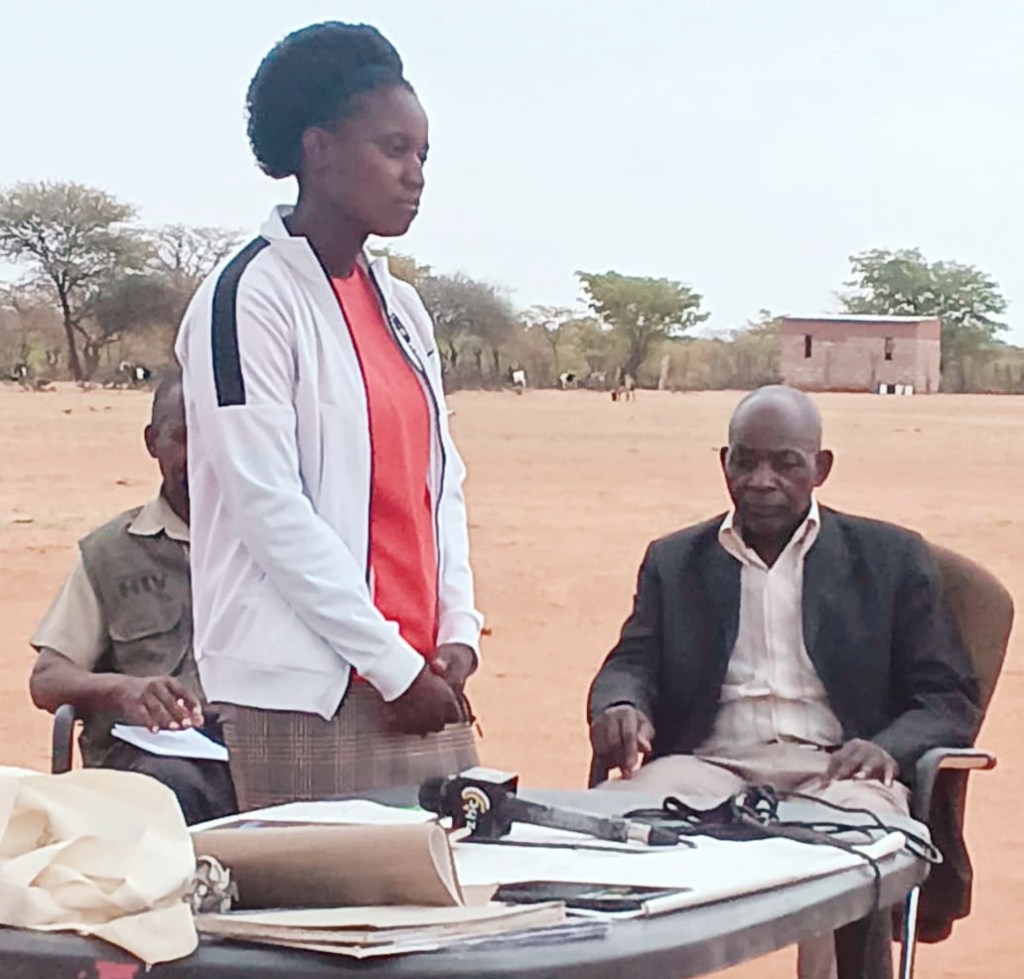
At the heart of this quiet revolution is 29-year-old mentor Sanelisiwe Nyathi, a mother, a mentor and role model. Trained by the National AIDS Council (NAC), she leads a group of 50 out-of-school girls aged between 15 and 24 through 40 sessions of open dialogue, life skills, and health education.
“We talk about everything, prevention, treatment, disclosure, love, money, and dreams,” said Miss Nyathi. “These girls are learning that they can control their own stories, and that they deserve better.”
The Sista2Sista program, developed by NAC in partnership with UNFPA, aims to protect adolescent girls and young women from HIV by equipping them with the knowledge, confidence, and skills to make informed choices. It targets those most vulnerable girls who are out of school, unemployed, or dependent on relationships for survival.
According to Bulilima District AIDS Coordinator, Mr. Ronald Hanyane, these efforts are crucial. The district’s HIV prevalence rate is 17.6 percent, the highest in Matabeleland South Province, while neighbouring Mangwe stands at 16.8 percent. Data from the 2025 District AIDS Coordinator’s report show that new infections are most prevalent among young women aged 15 to 24, who also make up the majority of antenatal care bookings.
“Our young women continue to face the highest risk of infection,” said Hanyane. “Sista2Sista is helping us reach them early before infection, before crisis through empowerment, education, and mentorship.”
Inside the Masendu sessions, conversations go far beyond classroom lessons. The girls share stories of pressure, fear, and survival experiences that echo the realities many rural girls face across Zimbabwe.
Some confess they still fear disclosing an HIV-positive status to partners, worrying about violence, blame, or ridicule. Others admit that even close friends cannot be trusted with such private news. Yet, through the program, they are learning resilience and discovering that knowledge can protect them even where silence has long prevailed.
“I know how to protect myself now,” said one participant. “Before, I didn’t think I had a choice. Now I know my worth.”
Parents in Masendu have embraced the initiative, allowing their daughters to attend sessions. Some girls still miss meetings due to heavy household chores, but those who attend regularly say they feel more confident and informed about relationships, sexual health, and HIV prevention.
“The biggest change I see is in how they talk about themselves,” said Nyathi. “They have dreams now. They want to learn skills, start projects, and take care of themselves.”
As the festive season approaches, the community braces for the return of men from Botswana and South Africa a time that often raises concern. Mentors fear that unempowered girls may fall prey to the so-called “blesser-blessie” phenomenon, where older men use money or gifts to lure young women into unsafe, unprotected sex.
“These men come back flashing rands and buying small luxuries,” Nyathi explained. “It’s easy for a girl with no income to fall into that trap. That’s why we teach them financial literacy because empowerment is the best protection.”
Through Sista2Sista, NAC is not only distributing monthly sanitary pads but also nurturing dignity and self-awareness. However, both mentors and community leaders say more must be done to ensure the program’s sustainability and long-term impact.
“Sanitary pads are a great start,” said Nyathi. “But what these girls need most is opportunity and the chance to build their own income, to be independent. Once a girl can earn a living, she won’t have to depend on anyone for survival.”
As Bulilima continues to battle one of the province’s highest infection rates, the Sista2Sista model offers a blueprint for change. It connects prevention with empowerment, transforming vulnerability into strength and stigma into sisterhood. But for this impact to grow, the program needs support beyond the classroom.
Stakeholders from government departments and NGOs to churches and private partners are being called upon to invest in the dreams of these girls. Training in income-generating projects, access to microfinance, and mentorship in entrepreneurship could give these young women the independence they need to stay safe, confident, and self-reliant.
“If we all come together,” said Hanyane, “we can build a future where no girl is lost to poverty or HIV. The strength is already here it only needs support through the multi-sectoral response system.”
Under the wide Bulilima sky, as the girls disperse from their session, they leave behind laughter, footprints, and something far greater a promise of change.
Through Sista2Sista, empowerment has become protection, and sisterhood has become a lifeline. With the right support, these girls will not only survive they will lead the fight to end HIV for good.

 radiobukalanga.org
Leave a comment