
By Yvonne T. Buzwane |Radio Bukalanga | 4 November 2025
In Bulilima District’s Matjinge Ward, a quiet transformation is taking place, one built on shared responsibility, trust, and resilience. While the world marks decades of progress in the fight against HIV, communities like Matjinge are showing that the most powerful solutions often start from within.
At the centre of this progress is the Community ART Refill Group (CARG) model, a National AIDS Council (NAC) initiative that empowers people living with HIV to take charge of their treatment and health.
One of the young leaders driving this change is Nonhlanhla Bhebhe, a young woman leading five CARGs of 10 members each, a total of 50 people on antiretroviral therapy (ART). Trained by NAC, Nonhlanhla helps ensure that every member receives their medication on time, stays on treatment, and supports others along the way.
“This system has made a big difference for us,” she said. “People used to travel long distances to the clinic every few months, and some people would miss their refill dates. Now, only one of us goes to collect medication for the whole group every six months on a rotational basis. No one is left behind.”
According to the National AIDS Council, Bulilima’s HIV prevalence rate stands at 17.6 percent, the highest in Matabeleland South Province. In neighbouring Mangwe, prevalence is 16.8 percent, and the incidence rate among adults aged 15–49 is 0.27 percent, the highest in the province. These figures underscore the urgent need for effective community-led interventions like CARGs to succeed.
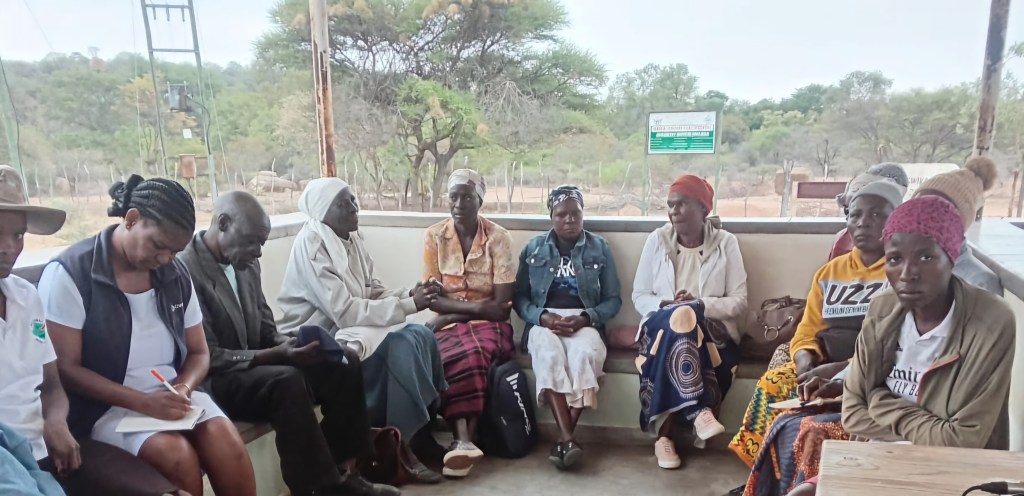
The model is designed for patients who have achieved undetectable viral loads, have been stable on treatment for at least six months, and are not living with other chronic conditions. Once part of a CARG, members meet monthly to review adherence, discuss health topics, and support one another.
Each group keeps a refill monitoring tool that tracks who has collected medication, who might be defaulting, and who may need clinic follow-up. This data-driven approach allows clinics to focus their attention on patients who need extra care, reducing workload for health staff.
“At every meeting, we count our pills together,” explained one group member. “If someone has extra tablets left, it means they are missing doses. We talk about it as a family and encourage one another. The system keeps us accountable.”
At Matjinge Clinic, there are now 14 active CARGs, all contributing to improved treatment adherence, reduced clinic congestion, and stronger social support networks. For health workers, the model eases the pressure of serving large numbers of patients while ensuring no one falls through the cracks.
“The CARG initiative has proven that community participation is key to ending AIDS as a public health threat,” said a NAC official during the recent media tour to Bulilima. “It encourages ownership, strengthens adherence, and promotes positive living.”
Beyond health benefits, the groups have also created emotional and social stability. Members describe their meetings as moments of laughter, learning, and empowerment a space where stigma fades and hope grows.
“We are not just collecting pills,” Nonhlanhla said. “We are building confidence and friendship. Some people even want to join just because of how united we are.”
Looking ahead, NAC hopes that CARGs can expand their scope beyond treatment to include village savings clubs and income-generating projects, empowering members economically while sustaining their health gains through a multi-sectorial approach
As Bulilima and Mangwe continue to record high infection rates, initiatives like the CARG model represent a critical bridge between clinics and communities. They are helping turn treatment into teamwork, and survival into strength.
In Matjinge, that unity is visible: fifty people, five groups, one purpose, to stay alive, stay healthy, and prove that community care can indeed change the course of HIV.

 radiobukalanga.org
Leave a comment