

By Godwin Gumbo
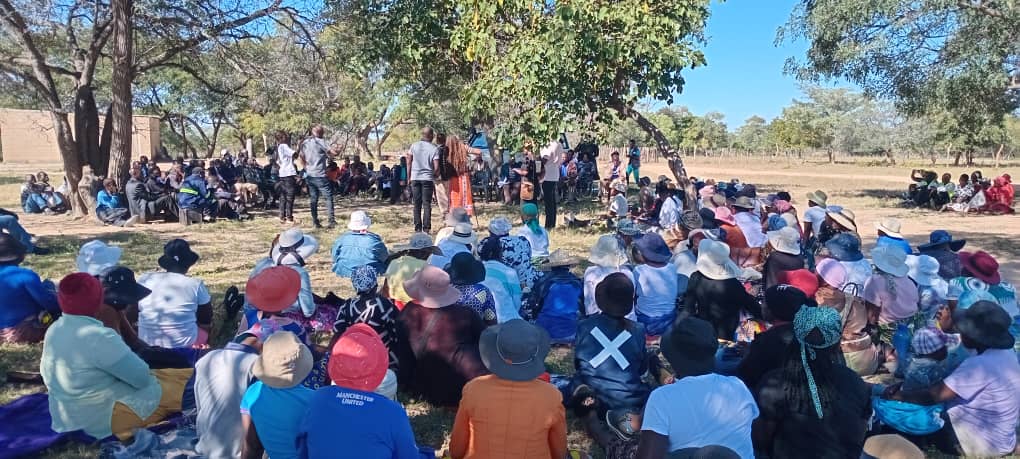
Communities in Matabeleland South are stepping up efforts to tackle the growing challenges of child marriages and HIV prevalence, with traditional leaders and villagers joining hands to protect the rights and health of children, especially girls This came during a recent provincial media tour hosted by the National Aids Council.
Through the National AIDS Council’s “Not In My Village” campaign, several rural communities are driving grassroots responses that combine healthcare access, community education, and cultural leadership to address the intertwined issues of early marriage and rising HIV infections.
In Insiza District, Chief Sibasa has become a leading voice in denouncing child marriages. Speaking during a recent campaign meeting in Filabusi, the chief stated that cultural practices should not be misused to justify abuse.
“Child marriage is not our tradition. It is abuse,” he said. “We must stop confusing criminality with custom.”
His remarks were echoed by other traditional leaders across the province, including Chiefs Mathema in Mtshabezi, who have committed to working with communities to end underage unions and support youth empowerment.
In Nsango village under Chief Jahana, a rural homestead has transformed into a vital pickup point for antiretroviral therapy (ART) and a venue for outreach activities What began as a solution to address the long distance to clinics has become a critical health access point for people living with HIV.
The initiative has been credited with improving adherence to treatment and encouraging more villagers to know their status. During a medical outreach hosted as part of the media tour, the homestead hosted medical staff who did health checks for chronic conditions like high blood pressure and diabetes.
“We now understand our health better,” said one local woman who attends regularly. “This place has changed our lives, especially with balancing working at home and collecting my medication.
In Bulilima and Mangwe Districts, particularly, there are concerns over the high prevalence of HIV, especially among adolescent girls and young women, with child marriages statistics relatively lower compared to other districts in the province. The challenges are compounded by cross-border migration and early sexual activity. Mangwe has a worrisome record of 21.67 % HIV prevalence rate among the 15 to 49 years age group while Bulilima has an HIV prevalence of 22.51% in the same age group, the highest in Matebeleland South. The National Aids Council has acknowledged that targeted initiatives meant to dismantle the enabling factors to these statistics in the two districts are in place together with ongoing efforts of Sexual Health and Reproductive Rights.
In Mtshazo near Mtshabezi, a similar health outreach brought services such as HIV testing, family planning, and counselling directly to villagers. The outreach was organized by the National AIDS Council with support from local village health workers.
The event was attended by young people, elderly residents, and traditional leaders. Several villagers were diagnosed with previously unknown conditions and referred to clinics for follow-up care.
Chief Mathema, who was present during the outreach, pledged to protect children from early marriage and urged parents to prioritize education and health.
Despite limited resources, communities across Matabeleland South are taking ownership of the fight against HIV and child marriages. The combined use of traditional leadership, mobile clinics, home-based ART delivery, and youth education has created a model that could be replicated in other rural districts.
NAC provincial Manager Mr Mgcini Ncube says the campaign is shifting mindsets by encouraging dialogue and accountability. “These are not just health issues—they are social justice issues, and rural communities are showing that they are not powerless.”
With child marriages and HIV deeply linked, health advocates are calling for more support for local solutions, especially those led by women, youth, and traditional leaders. Continued collaboration between government departments, community radio, and civic organizations will also be key.
In villages across the rainbow province, a new message is gaining traction: child marriage is not acceptable, and communities must protect their children at all costs. The slogan “Not in My Village” is becoming more than a campaign—it’s a promise to safeguard the girl child.

 radiobukalanga.org
Leave a comment