
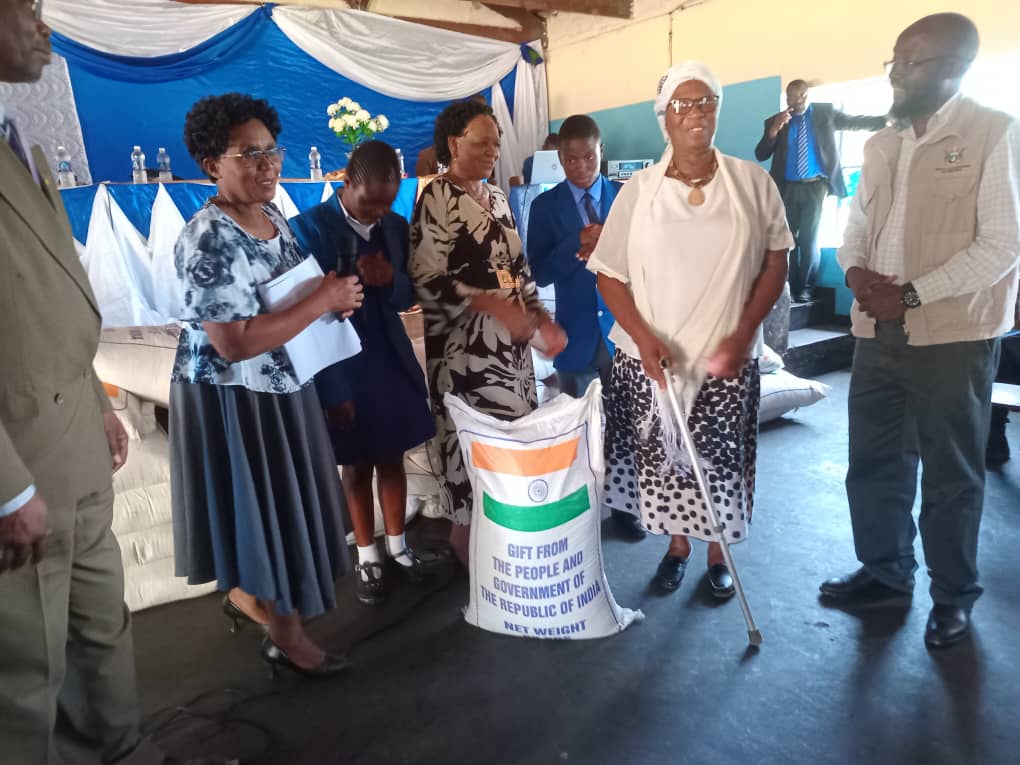
Bulilima, Zimbabwe – Schools in Bulilima District have received a significant boost in their school feeding programme following a generous donation of 65 bags of rice. The donation, made by the Minister of State for Provincial Affairs and Devolution Hon. Dr. Evelyn Ndlovu, aims to support learners by ensuring they have access to nutritious meals that enhance their learning experience.
Dr. Ndlovu, who was the guest of honor at the handover event, was accompanied by Provincial Education Director (PED) Mrs. Manjere, Bulilima District Development Coordinator (DDC) Mr. O. Zogara, and the District Schools Inspector Mr Gobile. The donation aligns with the government’s commitment to ensuring that no child is left behind due to hunger.
Speaking at the event, PED Mrs. Manjere emphasized the critical role of school feeding in improving education outcomes. She highlighted how previous feeding initiatives had encouraged school attendance, especially for Grade 7 learners who continued attending classes even after the official school term had ended.
“School feeding is a policy issue,” she said. “For many years, we have seen the positive impact of ensuring children receive meals at school. The government of Zimbabwe adopted the ‘warm plate’ approach in 2016, gradually expanding the school feeding program from ECD to junior levels and now working towards full implementation in secondary schools.”
She also acknowledged contributions from organizations such as CAMFED, which supported secondary schools in Matabeleland South last year. The continued expansion of the school feeding program, she noted, is a testament to its importance in securing the future of young learners.
Hon. Dr. Evelyn Ndlovu reinforced this message, stating that the donation was not just about providing food but about improving the overall well-being of students.
“A nutritious meal can make all the difference in a child’s ability to learn and focus,” she said. “As we distribute this rice, we are not only feeding their bodies but also nourishing their minds and spirits.”
She also highlighted the economic challenges faced by communities in Bulilima, which heavily rely on seasonal resources like Mahonja (Amacimbi), mpfula (marula), and livestock sales. Due to drought conditions, these income sources have been severely affected, making it difficult for parents to provide school fees and food for their children.
Dr. Ndlovu expressed concern over the social consequences of economic hardships, including school dropouts and increased substance abuse among youth. She urged school authorities and parents to work together to sustain the school feeding programme by contributing vegetables, meat, and fish alongside government-provided staple foods.
Furthermore, she encouraged schools to initiate income-generating projects such as poultry farming, piggery, and fish farming, which she had previously supported during her tenure as Minister of Primary and Secondary Education.
Giving her closing remarks,Chief Hikwa reiterated that parents must be actively involved in the school feeding programs as this ensures learners carry out studies with full stomachs. She further went on to mention that all programs made for the benefit of learners must prioritise the girl child both in Primary and Secondary Schools.
The event underscored the government’s commitment to strengthening the school feeding programme as a long-term strategy to enhance education, reduce dropouts, and improve the overall well-being of learners in rural communities.

 radiobukalanga.org
Leave a comment